Showing posts with label chronic illness. Show all posts

Tuesday, October 10, 2017

Me vs Gravity: Life with Dysautonomia


         October is also Dysautonomia Awareness Month! Wahoo! Dysautonomia is an umbrella term for several conditions that result from a dysfunction of the autonomic nervous system (ANS). Many people know of the ANS from health class as being the system that is in charge of the "fight or flight" response, and you'd be mostly right. Yes, the ANS is in charge of "fight or flight" but more broadly, it is essentially in charge of regulating the automatic functions of your body. There are nine different types of dysautonomia: POTS, OI, AAG, Pandys, NMH, NCS, PAF, FD, and MSA. Learn more about them here. For this post I will only be talking about POTS and my experiences with POTS. I have secondary hyperadenergic POTS (hPOTS).

What is POTS?

As stated above, POTS is a neurological condition in which the ANS does not send the proper signals to the body to regulate blood pressure and heart rate (primarily, POTS affects the whole body).  Normally, when a person stands, gravity pulls blood to the lower extremities. The nervous system senses this and sends a message to the blood vessels to constrict, sending more blood back to the heart and head. With POTS, this message to constrict does not get sent. Therefore, instead of the heart rate increasing by a normal 10 to 15 bpm upon standing, it can increase by more than 30 and can even double (when first diagnosed mine went from 68 bpm lying down to 189 bpm and remained that way for 10+ minutes). By affecting circulation, it also affects cerebral blood flow. Symptoms include orthostatic intolerance (dizziness), chest pain, headaches, GI cramps and dysmotility, inability to focus and concentrate for long periods of time, inability to read due to blurred vision, difficulty with recall, blood pooling, extreme fatigue, nausea, tremulousness, insomnia, loss of consciousness. 

What causes POTS?

While there is some knowledge about comorbid conditions that are commonly seen with POTS and certain types of POTS have associated causes with the start of symptoms, it is unknown what is the true cause. For example, one type of POTS can occur post-concussion and we know that but not everyone who gets a concussion gets POTS. There is currently no cure and treatment is based on symptom management. 

Common Misconceptions

  • POTS is caused by anxiety. POTS symptoms can mimic anxiety/panic disorders patients are often misdiagnosed or POTS is missed entirely because symptoms are deemed to be caused by anxiety. See research here
  • POTS is caused by deconditioning. See research here. Exercise (for those allowed by their doctors) can be a crucial part of a POTS patient's treatment plan but is not caused by deconditioning and cannot be cured by exercise alone
  • POTS is just getting dizzy sometimes. POTS is a complex neurological condition that effects every patient different though almost all, if not all, have multiple organ systems effected. 

Lingo

  • brain fog: cloudy feeling that hangs around and causes you to do stupid shit like flush the toilet three times, forget if you took your meds or just thought about taking your meds, and being unable to form a coherent sentence

What my POTS is like

***Disclaimer: This will by no means be an extensive list of symptoms or experiences and this is just how POTS effects me. There will also be crossover between EDS, GP, MCAD and possibly LQTS.***

       I was formally diagnosed with POTS in 2015 though I had symptoms beginning in early middle school years. To save my fingers I am just going to talk about my current life with POTS and will probably do a more extensive post later, I just tired and lazy.
       Remember the last time you had the flu and ached everywhere, slept all day and don't remember half of what happened? Now imagine waking up feeling like that every day (and more! yaaay), this is one of my main struggles with POTS. Several factors contribute the fatigue including medication and adrenaline surges/crashes but on any given day my energy level is equal to or less than a sloth on Ambien. I take naps nearly daily, sometimes multiple times a day just to keep up with my peers. I have trouble filtering out stimuli, recalling things, producing speech, following multistep directions, and reading for comprehension.
        Another big problem I have is blood pooling. POTS alone can cause bad pooling but with the stretchiness of my veins from EDS, it is much worse. I also have Raynaud's syndrome so my hands and feet are always cold! The picture to the left is an example of blood pooling in my hands (on medication). This is what happens if I stand with one hand raised and one arm relaxed for two minutes. The white hand was raised and therefore has less pooling (gravity does all the work). After about a minute of sitting my legs look like my left hand. Now imagine a 11 hour car ride or a 3 hour lecture. This is why many POTSies wear compression stockings and socks to help our bodies circulate blood or why lying down with our legs up helps. 


       While POTS impacts many things in my life it does not mean I can't do fun stuff, learn, and enjoy life I just need everything to slow down and take breaks. I have very limited energy and most is spent on school, existing, medical appointments, personal hygiene (showers are EXHAUSTING), and keeping myself alive. I have to worry about getting places without steps, lying down in the middle of the mall to keep myself from passing out, obsessing over hydration and medication schedules to maintain baseline and prevent things from spiraling out of control, and pretend to be a functioning adult.

Thanks for reading and make noise for turquoise (dysautonomia awareness color)! 


Tuesday, August 15, 2017

Sick of Silent Suffering

        Over the past couple years I have become increasingly open about talking,  writing,  blogging,  and advocating about things that are important to me,  including my chronic illnesses but I definitely wasn’t always this way and my family,  for all their wonderful other qualities,  is more the suffer in silence type.  That is how I grew up and it wasn’t until recently I realized the toll it has taken on me.  *Side note:  I do believe that this system works for some people and keep them happier,  I’m not judging.* Back to glorious me. The problem with suffer in silence is that,  intentionally or subconsciously,  it creates a wall between you and “everyone else”.  After all,  how could you possibly know that another person was facing similar challenges as you if they are also silent?  One of my most valued friendships is with someone that I despised in high school because she was getting help for what turned out to be the same condition I had (she hated me back because I flew under the radar). We reconnected after my diagnosis and confessed our mutual hatred for each other and turns out we are very similar people with similar struggles and challenges and we keep each other sane (lol, if you can call it that L.B.N). Yes,  that is a extreme example but hang in there.  

       We are social creatures.  We strive to make connections with others,  find the people who make us laugh and support us,  and teach us about the world. We long to fit in,  to be noticed, or even to be famous.  But who here can say that they have felt it is easier or better or more desired to suffer in silence no matter how big or small the challenge is? I struggled through my education beating myself up along the way for not being able to figure out long division,  for NEVER being able to spell things right,  for trying to fit in harder than I tried to learn. Growing up in an area that prides academic achievement as a critical pillar of your existence,  I felt like a failure even though I “made good grades and had good friends”.  It wasn’t just academically either,  family stress... silence,  friend drama... silence,  depression... silence, and pain... silence.  Then I graduated and moved to Birmingham,  AL.  Which made it so.  much.  worse.  There saving face is critical to social acceptance.  It was suffocating for me and I’m fairly certain contributed to my physical and mental health getting so much worse.  There is a great Miranda Lambert song (oh no Julie... not country.  Yes.  Country.) called “Mama’s Broken Heart” about a breakup and saving face. It “don’t matter how you feel,  it only matters how you look... my mama came from a softer generation where you get a grip and bite your lip just to save a little face”. 

       So I left and moved back here and that is when I decided to stop hiding and start being open about all kinds of things and I have been amazed at where it has lead me.  I have accepted the vulnerability that comes with exposing hurt,  weakness,  and challenges and through it have gained truly amazing friends,  education, healing and perspective.  I no longer feel totally alone in this world which I am remind of even in my worst days by the true connections I have made with others.  I am learning to express myself,  care for myself,  and help others.  I truly believe that vulnerability leads to connection and connection leads to understanding and understanding leads to compassion and compassion... well compassion is pretty powerful stuff.  


“The irony that we attempt to disown our difficult stories to appear more whole or more acceptable but our wholeness - even our wholeheartedness- actually depends on the integration of all our experiences including the falls. “ -Brene Brown

Thursday, June 8, 2017

Physical Therapy

     I have been in and out of physical therapy for about 11 years now. For the first five years, PT for me was limited to various joints after injury and was addressed from an purely reparative orthopedic perspective AKA they were only concerned with one joint at a time and repairing whatever injury I was currently recovering from. While this probably works for most people, with someone with a systemic musculoskeletal disorder, it wound up doing more harm than good. Because I was constantly pushing my joints without knowing it, occurring lots of damage and injuries and just overall having no idea what was going on. After dropping out my freshman year, I stumbled upon amazing PT #1. She was a rehab PT and helped answer the critical question of the time: "why, after years of PT, was I still getting worse?". It was one of the first times anyone had looked at all of me as a functioning system that needed to be connected. I worked intensely with her for almost two years before she went on maternity leave and her practice switched to out of network. It took me a couple months to find the practice I am at now and I am forever thankful for everyone there, especially Gavin, my PT.
      Younger athlete me would laugh at the seemingly stagnant pace of progress that I operate in now. She would laugh at how simple the exercises were,  how slow they must be done to protect from injury, and how many little things knock me out. When I look back to all the sports, climbs, hikes, and runs I did it is almost as if it is a different person. Now I get high fives for rolling over, standing up without falling or passing out, and walking without assistance. It is almost silly to compare but at the same time, I believe it is important to know where you came from. I am making progress. I am getting stronger. I am working hard. It just looks different now.
        The importance of having a PT that supports you, listens to you, and believes in you CANNOT be understated. For EDSers especially, this isn't an area you should compromise in, trust me I have seen the damage it can do. Deconditioning, spasticity, injury, depression, general fuckitness. My PT and I have toughed it out through some major obstacles, setbacks, and flares. So heres to you, Sir Gavin the Brave for taking me on as a challenge and helping me learn to protect the function I have left and be patient with my body and mind.  Seriously, I don't know what I would do without you.

Thursday, May 4, 2017

Where's that Flintstones Chewable Morphine at?

      I know I literally just said I don't like talking about my pain and now here I am doing a post on pain. I decided I felt like it was an important enough aspect of me and EDS and since I don't often talk about it, awareness month might be a good time for that. So here goes!
#spoonielife
       I can not remember not being in pain, there may have been times where that has been the case but I thought I was normal until middle school (diagnosis backstory here). Nowadays, most of my chronic pain comes in one or all of the following forms: muscular (spasms, tears, fatigue and irritation from subluxations and dislocations), joint movements (subluxations and dislocations), mostly constant dull all over pain (I'm sure its a sign of being a demi-zebracorn?!), migraines (light sensistivity, eye strain, post-concussive issues, cervical spine subluxations, cerebrospinal fluid blockages, Chiari, position of the earth and sun, stress, lack of "good" sleep), GI pain (digestive tract paralysis, gastroparesis, mast cell activation in gut (MCAD) ), and other. Between allergies, MCAD sensitivities and Long QT Syndrome restrictions the only pain medication I can take is morphine and it gives me a lot of strange symptoms so I avoid it unless absolutely necessary. Pain management in EDS is almost always complicated due to the varying types of pain, comorbid conditions (including other pain disorders such as fibromyalgia), and severity and chronic nature of the pain. Because every case of EDS is different, what works for one might not work for another. I have zebra friends who manage pain with essential oils, some with opiates, some with PT and yoga, some with sheer willpower... everyone is different. 

      As EDS is a mostly invisible illness, people I meet and befriend are often shocked that I am in pain. I have learned to hide it well and have learned exactly how far I can push myself before the pain becomes too bad (though sometimes I totally disregard that knowledge). I really dislike that pain scale but on a good day I usually average a 5-6 and bad days a 8-9.5 for people who that means something to. Even well managed, pain effects your whole body, mind, and life. It does not have to control it, but it is a huge part of it. 
      Another thing I find people have a hard time understanding is the fluctuations or flare ups of chronic illnesses/chronic pain. This runs many into questions like "I saw you walking yesterday...why are you in a wheelchair now?" or "But last week you could unload the dishwasher, I saw you do it...are you just trying to get out of doing it?". These questions can be prefaced either judgmentally or curiosity but are hard to deal with over and over again, especially on high pain days. Additionally, many of us face invalidation from medical professionals that impact our reactions and instincts, further complicating things. In my experience, leading a comment or question with "I want to understand but I'm confused..." usually gets a better reaction. Pain can be very isolating and can make us say or do things we don't like. Pain sucks guys. DUH. 


May the forth be with you all and beware of the revenge of the sixth!

Monday, May 1, 2017

It's that time again! (EDS Awareness Month)

Hello lovelies, in case you didn't know because you live under a rock and you like it down there, May is Ehlers-Danlos Syndromes (EDS) Awareness Month! Now you know. My hope is to make several (possibilities range from 1-30) posts about various aspects of how EDS effects my life and things that I experience that I might not always talk about or might not always be visible (whooooooo!). But since this is the first post I am going to do a brief re-overview of what EDS is (to see last year's post for more detail click here). I am not going to touch much on the new classifications/criteria mostly because I don't quite understand it myself (sorry guys). Links will be throughout for more enticing information!!

What is Ehlers-Danlos Syndromes?

       Ehlers-Danlos Syndromes (EDS) is a group of inherited connective tissue disorders that effect your body's ability to produce strong collagen. Collagen is essentially the glue that holds your body together and is the most abundant protein in the body. With EDS, your collagen is weak or faulty. There are different types of collagen and each type forms certain types of tissue, bone, organ, muscle, and joint. The different types of EDS are due to mutations on different types of collagen (mostly joints vs mostly vasculature etc). That being said, if you have Vascular EDS you can still have hypermobility issues, it can get very complicated. EDS is a systemic disorder that is much more than just being bendy! Most types of EDS are rare, but hEDS/hypermobility EDS/type 3 is NOT rare and current estimates place its prevalence at around 1 in every 250. That being said, EDS is rarely diagnosed and rarely understood even in many medical circles. Every case of EDS is different, even when in families which can make it hard to diagnose. As my cardiologist says, "if you can't connect the issues, think connective tissues"!

How is your life with EDS different than your "typical" peers?

        Probably the major ones would be coping with chronic severe pain, having less energy, and having the schedule of an 80 year old (hospital visits, PT, OT, medications galore, pharmacy trips, naps). When I try and explain it to others some go with the "remember that time you got a bad case of the stomach flu, how you felt? yeah it is like that but we spoonies don't get better" but I don't really like that. It does a pretty good job on the comprehension level but it further separates us and points out our differences rather than our similarities. I, too, procrastinate on my schoolwork with Netflix. I, too, laugh at memes. I, too, want to graduate from college and have a job. I am not saying we have to ignore our differences but it can be hard enough to fit in when many of your peer groups activities are out of reach for you (sometimes literally haha). I also don't talk a lot about my pain with others because I don't want pity. My illnesses are a part of me but they do not define me. 

If they discovered a cure tomorrow would you take it?

      This one is hard to explain but probably not. EDS sucks but it is as much a part of me as having red hair is or speaking a bunch of languages. It has shaped me and my direction and made me tough as nails. That being said, if someone came to me with a viable pain medication we might have a different conversation.


I really do hope to post more later...stay tuned!

Monday, April 10, 2017

Life Hacks: Spoonie Edition

   A friend of mine suggested I write a post about this and I live to please but really not sure how many good ones I can come up with. Eh, should be fun. Life hacks and good products for spoonies in no particular order:


  1. Invest in non-bathing bathing supplies

  • dry shampoo: greasy hair is gross, showering is an olympic sport sometimes and this stuff is the bomb.com. I recommend this brand. Also super great if you're in the hospital and don't want to wrap IVs etc
  • wipes: same purpose but for the rest of your body. Also nice to get ones with aloe so you don't become all dried up. I like these.

2. Keep a to go back stocked in your room/car in case of apocalypse or other unexpected events.

basically if you don't look like this you
aren't doing it right
  • change of clothes with warm layered option (don't forget extra underwear)
  • extra day of meds
  • snack if you eat food
  • flashlight
  • KT tape and medical tape
  • eye mask for sleeping/blocking light
  • wipes
  • long phone charging cord or cord with power bank thingy (can never reach outlets in ERs)
  • carabiners, duct tape and zip ties (1000 uses)
  • water
  • first aid kit

3. Glass water bottles

  • this is kind of a weird one but especially for POTSies, who basically need to constantly drink water to survive, this is a good one
  • why: easier to clean, better for putting ice in, won't give you cancer or whatever BPA does to you, durable, taste better
  • also recommend getting one with a straw, easier to sip if not upright, and don't spill as much if you're a spazz
  • This is the one I have an LOVE! I've dropped it hundreds of times and the straw doesn't require a lot of mouth strength to drink out of (#edsprobs)

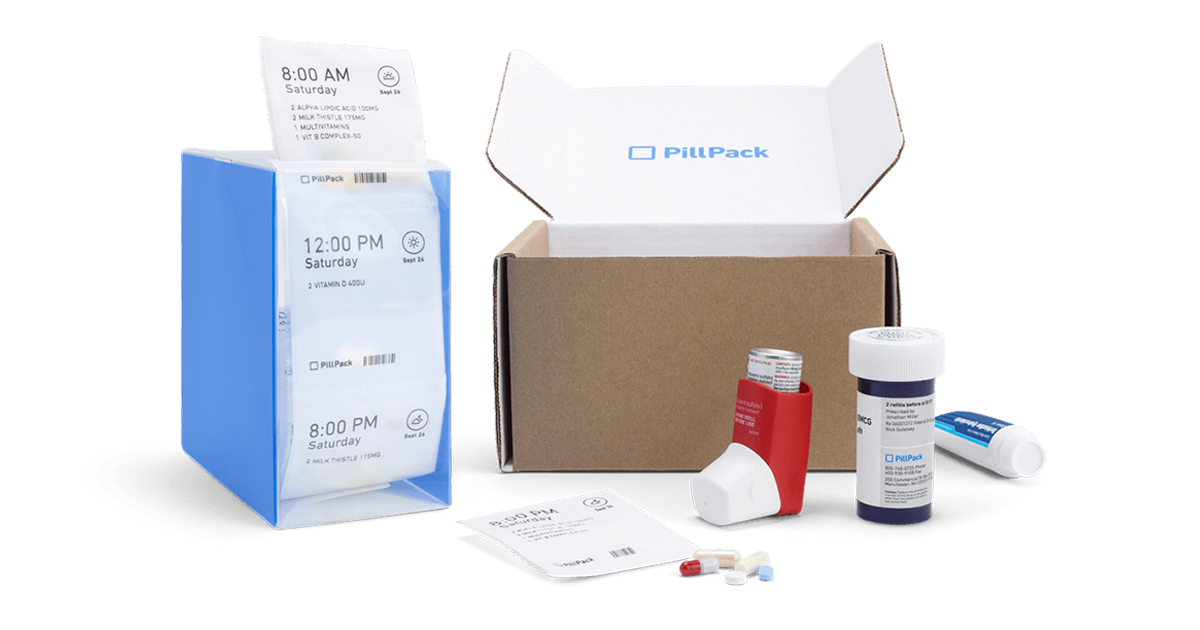
4. PillPack

  • Pillpack is a mail order pharmacy that pre sorts and packages all your medications and supplements and ships them directly to you. I have been using them for about a year now and love it!
  • they call your docs for refills for you
  • they accept most major insurance companies
  • pay the same copays as you would for CVS, Walgreens, Safeway etc and that is it
  • great customer support and online portal
  • billing options for credit card automatic/not, FSA/HSA etc
  • medication remind app
  • don't have to spend time sorting meds (or wrongfully doing so)
  • they do my supplements as well as RX


5. Medical alert bracelets/information

  • I have spent many years searching for the right type and run into the same dilemma often: classic medical alert (chain and metal with star of life) is recognized but limiting due to allergies, lack of engraving space, or constant changing information vs classier ID or EMR (electronic record) system might not be recognized by EMS. 
    • NOTE: after many talks with EMS friends countless have said they're only trained to look at wrists for IDs
  • I have implemented a somewhat overkill system but I think its finally working:
    • I use the MyID system for my EMR/bracelet/wallet card. It can be accessed by anyone with a QR reader, smartphone, computer, or phone. It is paired with an app/website portal that can be updated whenever and offers options to upload files, notify emergency contacts, write explanations of your rare and weird medical conditions and much more. I have found that of all the solutions for bracelets I have tried (flashdrive, traditional, wallet card, necklace), this works best. I also have a MyID wallet card in my wallet, and stickers on my phone case and school ID (like I said, overkill is best)
      • I have this one personalized and on the front is has
        "Medical Alert/ Julie LASTNAME/ "see back ICE for info" 
      • Back has the access info, QR code, ID and PIN
    • I also have 3 silicone wristbands that give quick information on the same wrist. I do this because those are important for quick access, they draw attention to the other bracelet, and they paint the picture that I have multiple issues and they should definitely look at my EMR
      • "MAST CELL DISEASE/ I CARRY AN EPI PEN"
      • "LONG QT SYNDROME/ SADS AWARENESS"
      • "MEDICAL ALERT/ EHLERS-DANLOS SYNDROME"
    • BUT WAIT THERE'S MORE! At school, I also have a folder taped in plain sight on my dresser next to my bed labelled "EMERGENCY INFO" (useful for EMS, often gets passed to nurses too)
      • In it I have a copy of my 
        • MYID info
        • drivers license
        • insurance card
        • any wishes in regards to my care
        • communication instructions (since if EMS are there I often can't communicate well verbally

6. Mobility devices ≠ giving up ≠ bad

  • I started off using a cane, which I got from a drugstore, standing in line behind an 80 something year old man buying a cane and wanted to qualify my purchase with something like: "its a birthday present for my grandma...?". It was one of the first times my disability became frequently visible and took a while before I got used to people's questions, judgements, and my own stigma associated with it. But the cane wasn't good for me so I moved to forearm smart crutches which people just assumed I had sprained my ankle or something and left me alone. I hobbled on those for about a year before my shoulders gave out. Then I got my rollator which I like too, but is still hard on my body. For me, transitioning to being a part-time wheelchair user was not very hard. It gave me more independence, less pain, got me places faster, and allowed me more options for bad days. It isn't all magical though, people still judge or make comments, and there are still plenty of times I would rather just be able to walk or not have to worry about accessibility. 
  • Most important lesson I learned in that journey was that I needed to do what I needed for my body, lifestyle, and pain levels. I'm not going to lie and say I don't care what people think or that I'm somehow above it all, but for me the independence and assistance my chair allows me if definitely worth it.


Tuesday, February 28, 2017

Care about Rare

February 28th is Rare Disease Day.

Now, if you're like me you might roll your eyes at this one. In a time with social media, ice-bucket challenges, awareness months for every condition known to man, ribbons, and GoFundMe pages, awareness of something is almost always going on. Let us all admit we are burnt out on breast cancer awareness. Don't get me wrong, breast cancer sucks but the funding and publicity are not correlated with its prevalence, deadliness, or need for awareness. Additionally, caring burnout is occurring due to politics, wars, tragedies, disasters, and maybe even the loss of your beloved pet rock "Rocky Balboa". Whatever is going on in your life, I hear you, your frustrations and hurt are valid.

Now let me tell you about why Rare Disease Day is important.

First off, lets get our knowledge on because who knows anything about this stuff, let's be honest. According to the Global Genes Project:
Orphan drugs are drugs specifically for treating rare diseases.
In 1983, the US passed the Orphan Drug Act which allocates grant
funding to companies researching and developing orphan drugs.

  • in the US, a rare disease is any condition that affects less than 200,000 people (under 50,000 in the UK)
  • 80% of all rare disease patients are affected by approximately 350 diseases
  • 50% of people with rare diseases are children
  • 35% percent of deaths in the first year of life are attributed to rare diseases
  • 30% of children with rare diseases will not live to see their 5th birthday
  • ~50% of rare diseases do not have a specific foundation supporting or researching their rare diseases
  • Only 5% of rare diseases have ANY FDA approved treatment options
Okay, now we have the numbers, so what?

Before I get to the give away your money or talk about it phase, I want to try and tell you what it is like to live in the rare world. It is scary, it is hard, it is time and energy consuming, and often times... seemingly hopeless. This will not be sugarcoated, so skip ahead to the next meme for a jolly good time.

It is going to specialists only to have them say, "that's just how it is" or "I'm sorry, there is nothing we can do". It is knowing more about (or even about) your condition than many in the medical fields. It is, unfortunately, getting misdiagnosed, mistreated, or misinformed. It is having your second opinion being google... because there is no one else and you aren't sure if what the doctor is saying is true or correct or even sane. It is constantly having to be your own advocate, nurse, management team, awareness spokesperson, and cheerleader.  It is weighing being misunderstood or mistreated over getting urgent medical care. It is putting on a smile when all you feel like doing is crying. It is that moment of panic when you have a bad day that you will need help and be all alone. It is being surrounded by people who love and care about you, yet feeling alone. It is making plans with your other rare friend to have a movie marathon but spending the whole time talking about and decompressing about your illness, doctor's visits, anxieties, and fears. It is carrying a backpack instead of a purse because you need your medications, testing supplies, and toiletries so your mouth doesn't taste like vomit the rest of your adventure. It is envying people who can say, "oh, I have ____" and not have people say "what?". It is knowing that if you wound up in the ER and couldn't communicate and people didn't have your information... normal treatments could kill you. It is having pre-programmed phrases to spit out to explain your conditions, witty comebacks to counter arrogance, and feeling the need to justify yourself so people understand. It is getting told you could fix your diseases if you prayed harder. Or drank only kale. Or by righting your sins. All from random strangers. Above all, it is isolation and uncertainty. 
So what can you do?

  • Spread awareness on social media, not just today...any day
  • Talk about rare diseases
  • Donate to rare disease research
  • Donate to companies working on orphan drugs
  • And last, but certainly not least, know that you are never alone: with our without a rare disease!


Click on picture to learn more or donate!


Tuesday, September 27, 2016

I'm invisible... You can't see me!

       Lol but actually in case you couldn't tell by the cheeseball title, I plan to ramble on about invisible disabilities because it's invisible disabilities week! It's pretty self explanatory but an invisible disability is any disability that can not be seen and has no major visual manifestations. Examples include: diabetes, depression, EDS, lupus, schizophrenia, anxiety, Lyme etc. Some examples of visible disabilities might include: Down Syndrome, spinal cord injury, amputation, blindness, or muscular dystrophy. 


It can be hard feeling so sick on the inside and looking “fine” on the outside. You also have to deal with people challenging your right to accessible parking spaces, store scooters, and even medical care. Since there is usually no way to tell the difference between someone with an invisible disability (ID) and a faker, I usually go with,”be kind, everyone you know is fighting their own battle”. One in every 5 Americans has a disability and many disabilities are invisible. Many of us get comments that we are faking being sick, when in reality, most of the time we are faking being well. We put on a smile and continue on with our lives despite the lack of energy, the intense pain, and feelings of hopelessness. To those of you who are close to me, you have seen me with my guard down, but for others you may have no idea I am in pain every day of my life. I don't mention this for pity or to complain but more so in attempts to open up a dialogue, even if just an internal one. I want take this post and this week to spread awareness, compassion, and answer people's questions if they have them. The love and support that y'all have given in various ways and modes truly amazes me.


Since I kinda missed EDS awareness in May except a blog post, I'm going to try and make an ID/EDS etc awareness video… Eventually. If I do, I will post the link here. 

Saturday, September 10, 2016

WARNING: Might just be one long rant...

        Okay... so I wanted to touch on a bunch of different things that don't have another home. I'm feeling very brain foggy/disorganized so if none of this makes sense... then it'll probably at least be entertaining.
#1: How long it takes to get anything done in the medical world
      Let me preface this with I ABSOLUTELY know this is not all on the medical professionals. There's shit with insurance, documentation guidelines, hospital rules and regulations, and just overweighted caseload that influence this issue. But seriously, it gets ridiculous.
Some examples:

  • I met with a new GI July 22nd. He seemed on top of his game, familiar with my conditions, and agreed that action needs to be taken to get by nutrition etc back on track. He had lots of medical history, former testing, current summary... everything he needed. He ordered a SmartPill test (camera pill you swallow and it takes pictures and does testing as it goes through your GI tract... pretty cool) and an upper and lower scope (sticking cameras up your arse and down your throat...yum). I had already had a gastric emptying test to diagnose gastroparesis (delayed stomach emptying), but we had no idea the motility of my intestines or if they absorb any of the nutrients. Fast forward 4 weeks until my scheduled SmartPill test swallow. I had to go off all GI meds for a week (which means not only more of the daily yuck but near constant acid coming up my throat), get a ride to the hospital, fast beforehand, take off work etc etc. I get there and they're (nurses) doing the pre-procedure checklist. They get to question #3 "do you have any implanted devices?"... "yes... but the doc knows about it... we talked about it"  "Let me give him a call"  *comes back 10 minutes later* "I'm sorry, the implant disqualifies you from doing this test, I have to cancel it... the doctor will give you a call (lol jk)". Okay, so waste of time. I messaged my doc later (shock and awe... he never called) and asked if we could schedule the only other test one can do to get the same data as the SmartPill. His response: we will talk about it next appointment. So you're thinking aight... that's okay. Wrong. Not only is his first available not until mid-November, but his office won't schedule any follow-up appointment until after I complete, and get the results back from the scope scheduled for September 14. So basically I'm SOL until at least December timeframe.... assuming that visit won't just mean going over EGD results and him ordering the same test I asked him about months earlier. Don't worry guys...it's only nutrition. 
  • It took my PT 3 weeks to write and sign a sentence saying "patient needs new custom wheelchair back to maintain posture and for support". 
  • It has taken my doc 5+ weeks (he was on vacation for one but still) to write and sign a prescription, note, and LOMN saying "patient needs custom bilateral AFOS". 
  • I've been waiting for records from one doctor for 13 months despite several verbal and written reminders to him and his staff.
#2: My two cents on the Epipen bull:
          As someone who is literally allergic to life (sunlight, heat, cold, stress, talking, meds etc) and must always have Epi on my person and has unfortunately had many uses of the autoinjectors I am pissed. But not just by Mylan (jerk face mcugly butts) jacking up the price of Epipens (500%), but the fact that I have multiple friends who have to make the choice between life-saving medicine, therapy, and treatments and feeding themselves or their kids. 
And we aren't even talking about those without insurance. Most of my friends are lucky enough to have some form of health insurance (even if its crappy) and are still drowning in bills and medical debt. There is not a single day that there isn't a medical bill arriving at my house and that is just ERs, hospitals, and doctor's bills. Plus medicine, devices, PT, testing, surgery, and prolotherapy (not covered by any insurance as it is "experimental"). I have been incredibly blessed with kick-ass insurance (although still a PITA) and to be able to stay afloat in the bills. Despite all kinds of preventative and prophylactic treatments, there is still only so much you can do to keep ahead of things and emergencies still happen. Epipens also only are viable for a year. They come in a 2 pack but most need more to keep one at school, one in the car, and one on your person. For most, it is now cheaper to go to the ER for anaphylaxis treatment than to use their Epipens. Honestly, all I got is "fuck you Mylan". No excuses, epinephrine is cheap, autoinjectors are relatively cheap. Not to mention their tax evasion strategies. 

#3: Depression
Since the people who 1) even read this blog and 2) read all the way til now and aren't asleep from boredom are probably the people who care, I saved this one for last. As some of you have noticed, I've been dipping into another depressive phase. Depression and me are buddies now so it's cool. It is also normal and a big part of chronic illness so don't go panic on me. So don't be alarmed if I'm a) super clingy and annoying or b) super avoidant and grumpy gills ... that's kinda just how it goes. See previous post RE: things you can do to help.  


Aight. That's all for now....

Sunday, August 21, 2016

What Can I Do To Help?

Dear Super Awesome Friend,
        Loving someone is hard, loving someone with chronic pain and chronic illnesses can add some uncharted territory. This is my attempt to help some friends out who have been struggling with the answer "I don't know" to the amazingly beautiful question of, "what can I do to help?"        
         First, know that while unsatisfying for your drive to be useful, fix the world, and get home in time for dinner, your presence and attention mean more than you might ever realize. Illness is lonely, isolating, and unpredictable. Waking up after a night of pain and other fun NSFW wonders to random memes, emojis, or stories can make a shift from bad day mode to good day mode (ze mind is a powerful thing you know). Obligated to text me every day and respond to everything I text you? Nope, Chuck Testa! While I hate saying no and canceling plans, I would almost always rather be invited (unless it's a chocolate festival in which case all self control will be throw to waste and the gastroparesis gods will reign down their mighty wrath). While each of you can probably call to memory many times where I have no taken care of myself or made bad choices, for the most part I know my limitations all too well.
       Here are some FAQ on this topic:
What are some things that are easy for you to do?

  1. All the time: laugh, watch netflix, talk about what I watch on netflix, watching disney movies, fix things, cards or board games, singing disney songs in rediculous voices
  2. Most of the time: all of the above, car rides, rolls near water (parks, creeks etc), going to movies, swimming, vidja games
  3. I HAVE SO MANY SPOONS AND GOT MORE THAN 3 HOURS OF SLEEP: rock climbing, nature, camping, amusement parks, museums,  and frisbee
What are some things that you don't like doing?
  1. Going to loud, busy or bright places or flashing lights
  2. Meeting multiple new people at once 
  3. Anything that requires long periods of focus (ie watching a pot boil, watching a fast paced subtitles movie)
  4. Games I can't win at (just kidding...kind of)
  5. Going out with multiple stops (chair loading and unloading is tiring yo)
When is it best to give you space?
  1. When I'm being a brat for no reason (fight me...I dare you)
  2. When I've been in a spoon drought (see above)
You haven't texted me back, did I do something wrong? Do you hate me?
Probably, most of you are terrible people. But actually no, usually it is one of the following:
  1. I'm low on spoons
  2. I'm having vision problems
  3. I read it, swore to the unicorns I responded but actually didn't, and found it three weeks later...
  4. I can't form coherent sentences in English
  5. I physically don't have my phone
I feel like a bad friend for not knowing how to help/what to do/what to say....
The fact you feel that way actually means you are a good friend and just not a psychic or a unicorn... we all can't be awesome ya know. But actually this one is a tough one because so far none of the answers I have given people have been reviewed as 5 star customer service. I guess all I can say is that I hear you and I understand and view nothing more or less of you measly humans. 

Am I supposed to laugh at your twisted jokes about death and illness or is that in bad taste?
You can laugh if you want.

I'm scared but I don't want you to know or worry about me because apparently there is some precedent for supposedly being able to tolerate scary diseases and pain and suffering of a close friend and I have to hold myself to that standard.... oh or I could accidentally kill you...
It is okay to be scared, I'm scared too. Give yourself time. 

I hope this helped someone but if not at least I got a few more memes into play. 
Love you fools,
Julie


Tuesday, May 31, 2016

But You Are So Young...

          But you are so young... words that pierce a hole right through my sternum. Yes, I am young but unfortunately chronic illnesses don't ask for ID. Yes, I am young but I know kids, young adults, adults, and seniors with chronic illnesses. Nobody tells a diabetic kid they can't be sick because they're too young! Yet we (spoonies of various illnesses) get it all the time. My passport and birth certificate concur that I am 21. I am young but anyone who has heard the snaps and cracks of putting my joints back in place before I get out of bed each morning would swear that I am 80. I am young but take more medication and supplements than my grandparents. I am young but I wake up each morning to face a monster that knows my name, my fears, and my limits. I am young but my calendar is that of a retiree: volunteering with doctors appointments and physical therapy to fill in the gaps. I am young but I have friends my age and younger fighting for their lives and few that lost their battle already. I may not look sick, or I may, but I feel sick. I feel these disease nestle into every nook and cranny of my body. I put on a smile to mask the pain and refuse to slow down for the fear that I will be eaten whole by the flames. As Plato said, "be kind, everyone you know is fighting a hard battle". While many of these comments aren't said with ill intent, they can be destructive to someone not quite back up on their feet. I suggest going with a complement not related to pain, illness, or weight for the general population. My heart broke the other day when a fellow friend with gastroparesis (stomach paralysis) told me (after losing a lot of weight do to sickness and malnourishment) her mom had told her she looks better "lighter" after she had just been talking to her mom about how she's really struggling with her GP. Pro-tip: Try crawling around in our bodies in your mind. If you were in constant pain and feeling defeated, would you want someone to tell you "you don't look sick!"? Even if with good intentions the answer would probably be no. You can always ask instead how we are doing or if we have seen any good movies recently (chances are if it is a spoonie the answer is YES...we watch a lot of Netflix... ;) ).

Harper Lee

Tuesday, May 3, 2016

May is EDS Awareness Month

Alright, it would be silly if I didn't post something EDS Awareness related because it is awareness month so here goes.
Here are some FAQ about Ehlers-Danlos Syndrome

  • What is Ehlers-Danlos Syndrome (EDS)?
    • EDS is a group of genetic connective tissue disorders (CTD) that affect your bodies ability to produce collagen. Collagen is a protein in connective tissues that acts as a glue for your body. People with EDS produce weak, faulty collagen which affects our joints, organs, blood vessels, ligaments, tendons, you get the jist. There are different subtypes based on which type of collagen the mutation is on. All types share joint laxity, easy bruising, and soft skin. There are currently six different types of EDS (newly revised): Classical, Hypermobility, Vascular, Kyphoscoliosis, Arthrochalasia, Dermatosparaxis, and Other. It is possible to have crossover, AKA more than one type (lucky duck...).
  • How is EDS diagnosed?
    • Excellent question self, EDS is a clinical diagnosis that can be confirmed with genetic testing in all but the hypermobility type. The clinical diagnosis comes in two components: the Beighton Score (asses joint hypermobility), and the newer Brighton score. (I know, it's stupidly similar names)
BRIGHTON CRITERIA
BEIGHTON SCORE (out of 9)


  • Is there a cure?
    • Major womp here. Not yet. But, in Baltimore they started the first EVER EDS Clinic and Research Center out of GBMC!
  • What are some conditions that are comorbid (related to and commonly occur together) with EDS ?
  • What was the point of that?
    • Because collagen is everywhere in your body, EDS effects everything. 
  • What's with the zebra?
    • The zebra is the mascot for rare diseases based off an old medical saying from the 1940's Dr. Theodore Woodward, "when you hear hoofbeats, think horses not zebras". This saying is used to remind medical students that it is often not a rare diagnosis. The problem is that medical zebras do exist, and it can be hard to remember that at times. The average time from start of symptoms to correct EDS diagnosis is 8-15 years. 


Some Facts About EDS!
  1. 50% of EDSers can touch their tongue to their nose! 
  2. EDS is currently estimated to effect 1 in every 5000 births world wide.
  3. It is likely that most contortionist have EDS or another connective tissue disorder.
  4. Professor Rodney Grahame, a British Rheumatologist in the field, says, "no other disease in the history of modern medicine, has been neglected in such as way as Ehlers-Danlos Syndrome.
  5. Characteristics of EDS were first described in 400 BC by Hippocrates, but the syndrome was named after Edvard Ehlers of Denmark in 1901 and Henri-Alexandre Danlos of France in 1908. 
  6. EDS is considered an invisible illness, even though it can have visible manifestations (extreme bruising, atrophic scarring, joint hypermobility, etc).
  7. Due to the lack of resources, research, and awareness there is no cure, few treatment options and is largely based on palliative care.
  8. Actress Cherylee Houston has Ehlers-Danlos Syndrome.
  9. Some breeds of cats, dogs, and horses can have EDS.
  10. Gary "Stretch" Turner, the man with the world's stretchiest skin has EDS. (likely did many contortionists and circus performers)

Congrats! That's all for today folks, feel free to comment if you have any questions, I'll do my best to answer them!
Jkjk...I hope :)


    Wednesday, April 20, 2016

    "Falling Behind"

    I'm a junior in college.
    Actually, well, I should be a junior in college.
    I'm actually a sophomore in college by credits, junior by age and semesters.
    But I'm catching up!
              No, actually I'm not. Still chugging away at what feels like a cruise controlled speed. Chugging away at the arbitrary set number of hours you must sit in school until deemed "educated". And I'm readily becoming more and more frustrated trying to arrange class schedules, accumulate credits in any way possible, and get a good enough grade so that I can move on. GMU has this nifty program called Degree Works that takes your credits and tells you what you still need to graduate, which classes fill that requirement, which classes have qualifiers, ya get the drift. According to Degree Works, after almost 9 semesters now, I am officially half way.
              College is not friendly towards students with chronic illnesses. Despite many universities attempts to bridge the gap with programs like disability services, the odds are still stacked against you. Many classes will drop you if you have too many absences (sometimes even 1), regardless of your ability to keep up with the work. College is also a breeding ground for germs, poor eating and sleep habits, and stress. Being physically able to get out of bed is one thing, going to class another, and then absorbing it? How about homework? Most homework either involves reading, computer use, studying, or essay writing. Most of those tasks are near impossible when eye strain, fatigue, migraines, photo sensitivity, concentration issues, and other fun cognitive issues plague your daily life. Reading that may take most people 30 minutes takes an hour for me. While most college students become sleep deprived zombies around finals too, finals for students with chronic illness can be especially challenging. Most people get sick during finals but because the pressure is on, non-chronically ill students are more likely to go to class, despite being sick and often times, contagious. This puts those of us with weaker immune systems at risk for getting very sick during finals when we are already probably pushing our limits.
               All of this and more makes me look at that half way mark and want to cry, but not tears of joy. Finishing college seems impossible (all my family out there chill, I know its not impossible and I'm not dropping out). It makes me sad because before I got sick I was so excited about college. About life beyond school. About making a difference. Now I feel like that motivation and joy of education is being slowly stripped from me. I don't want it to be this way. I want college to matter, to be something I enjoy rather than just another constant struggle. I'm scared this fog in my brain will never clear. I'm okay with "falling behind" but I'm not okay with staying behind.