Tuesday, April 18, 2017

IDK MY BFF JILL

If you don't know that reference it is from an 2007 phone commercial. Classic.

Anyways, I wanted to write a post about technology as assistive technology (AT) and more than just soul sucking relationship ruining screens that give you cancer. I will talk about how I use my devices as AT and why they are important for me and because of such, will be talking exclusively about Apple iOS devices because that is what I use. I plan to do another post about iOS as AAC devices and switch access eventually so this isn't the longest most boring post ever!

I am a die hard Apple fan. I was a die hard Apple fan before I got sick and have fallen even more in love since then. First, I am in no way paid by or speak for Apple or anything, I don't know why people have to say that but they do so I will! Second, I am not going to talk about Android because I know nothing of Android. I know they do not have as extensive built in accessibility features but they work better for some and that is fine. Lastly, I'm mainly going to be talking about why I choose Apple products as a person with a disability and what features help me or might be of help to those with similar conditions. So leggo my eggo (not paid by them either :( )!

First I'm going to talk about some settings/features that aren't technically accessibility settings (other menus) but that I have found to be helpful. 


Visual Voicemail and Transcription

Phone>Voicemail

Apple's visual voicemail system is one of the most underrated features in my opinion. For people with hearing/auditory processing issues, gone are the days of trying to remember which button to press to repeat the message...giving up and having to call VM all over again because you didn't quite catch that middle part. New to iOS10 is a beta for automatic voicemail transcription. Now, when you click on a message and press play, the recording plays and an automatic transcription is written below. If it picks up a phone number it will be hyperlinked and a long press will give you options to call, message, or add number to contacts. For someone with Dyslexia this is a god send. I call/text wrong numbers constantly when I try to manually copy them down. Additionally, it is useful for those with hearing loss, auditory processing issues, or even if you want to scan the content in a meeting to know if it is urgent.

Find My Friends/ Location sharing in apps such as messages

At first I was not into having my mom be able to open an app and track my phone but it really has grown on me. This is definitely not the set-up for everyone (could be with someone other than your mom) but in times where I have gotten hauled off to the ER and they leave a VM on her phone saying "Julie's in the ER", being able to see which ER, if I am still there, or where I am if I am too confused to figure it out can be super useful. Again, not for everyone. 

SIRI

Siri is great and almighty electronic goddess, obey her.

EMERGENGY HOME SCREEN MEDICAL ID

(to set up) Health App>Medical ID> Edit

At the minimum please put in your organ donor status, name, and emergency contacts. It can be accessed by EMS/ED staff even if you have a lock on your phone. To view access, get to the lock screen with the number panel, click emergency in the bottom left, click medical ID. 


ACCESSIBILITY SETTINGS (iPad and iPhone though most are available on laptop just different paths etc)

******There are so many-- I'm just going over what I personally use******

Display Accommodations 

Settings>General>Accessibility> Display Accommodations


Another brilliant addition to iOS10 was the Color Filters setting. This allows the user to tint their screen to their liking/need. This is a godsend for anyone with photosensitivity, migraines, color blindness, eye strain, and other vision conditions. It allows me to turn my screen a nice pinky-orangey tint that I would otherwise have to wear my specialty  indoor migraine glasses for. Another feature in this category is Reduce Whitepoint. This setting allows the user to reduce the intensity of bright colors on the screen by 25-100%. No longer need you be blinded by a white screen loading a webpage on ridiculously slow internet.

Speech

Settings>General>Accessibility>Speech

I wouldn't be able to do much of my homework or social media without text-to-speech software due to eye strain, dyslexia, migraines, photosensitivity and reading comprehension issues. This is definitely one of my most undervalued helpers and it wasn't until I was trying to read a textbook chapter on a different computer that I realize how much I rely on it and am assisted by it.
       Features/Settings:
  • Speak selection: when on, this will give you a "speak" button when you highlight text (next to copy/paste etc)
  • Speak screen: dragging two fingers from the top down will start speaking items on the screen
  • Highlight content: highlights words/sentences/words and sentences as they are read
  • Typing feedback: options to have keys/words/sentences you type to be read back to you 
  • Voices: different synthesized voice options for speaker for gender, language, and accent
  • Speaking Rate: how fast the voice talks
  • Pronunciations: tell it how to say certain words like Ehlers-Danlos

Reduce Motion

Settings>General>Accessibility> Reduce Motion

This one is really helpful if you have vision triggered disabilities or just don't want all the fancy graphics for things like opening and closing apps. 

Switch Control and Assistive Touch

Settings>General>Accessibility>Switch Control or Assistive Touch
 
These are more specialized/complicated but amazing accessibility features I plan to do a separate post or maybe video for but I will just share their purpose now. Switch Control is for people with physical, cognitive, or sensory disabilities who have trouble accessing all or many of their functions or their iDevices via direct selection AKA touching the screen with their hand or a stylus. It is a built in program that allows the device to be controlled and used entirely via 1 or 1 switches. Switches can be the whole screen, head movements, external switches (wired or bluetooth), sip and puff (controlled by mouth movements) and more! For an example of switch access by someone who can do amazing things with it, watch the video! Assistive Touch is basically an accessible menu for people who have physical challenges performing actions like pinching to zoom. 


Subtitles and Captioning

Settings>General>Accessibility>Media> Subtitles and Captioning

I actually only recently learned about this feature but if you like subtitles or need them, make sure you have this setting turned on and it will automatically turn on subtitles when available in apps like facebook, netflix, chrome etc. 


Accessibility Shortcut

Settings>General>Accessibility> Accessibility Shortcut

Another relatively new feature this one can wear many different hats based on your needs. What is does is set a shortcut on/off switch for a selected accessibility feature by triple clicking the home button. On my phone, this turns on the pinky-orangey tint from my Color Filters settings. Since I only use that at night usually, it saves me a couple clicks turning it on/off everyday. On my iPad, I have it set to turn on Switch Control (more on that later) for when I use that.

Monday, April 10, 2017

Life Hacks: Spoonie Edition

   A friend of mine suggested I write a post about this and I live to please but really not sure how many good ones I can come up with. Eh, should be fun. Life hacks and good products for spoonies in no particular order:


  1. Invest in non-bathing bathing supplies

  • dry shampoo: greasy hair is gross, showering is an olympic sport sometimes and this stuff is the bomb.com. I recommend this brand. Also super great if you're in the hospital and don't want to wrap IVs etc
  • wipes: same purpose but for the rest of your body. Also nice to get ones with aloe so you don't become all dried up. I like these.

2. Keep a to go back stocked in your room/car in case of apocalypse or other unexpected events.

basically if you don't look like this you
aren't doing it right
  • change of clothes with warm layered option (don't forget extra underwear)
  • extra day of meds
  • snack if you eat food
  • flashlight
  • KT tape and medical tape
  • eye mask for sleeping/blocking light
  • wipes
  • long phone charging cord or cord with power bank thingy (can never reach outlets in ERs)
  • carabiners, duct tape and zip ties (1000 uses)
  • water
  • first aid kit

3. Glass water bottles

  • this is kind of a weird one but especially for POTSies, who basically need to constantly drink water to survive, this is a good one
  • why: easier to clean, better for putting ice in, won't give you cancer or whatever BPA does to you, durable, taste better
  • also recommend getting one with a straw, easier to sip if not upright, and don't spill as much if you're a spazz
  • This is the one I have an LOVE! I've dropped it hundreds of times and the straw doesn't require a lot of mouth strength to drink out of (#edsprobs)

4. PillPack

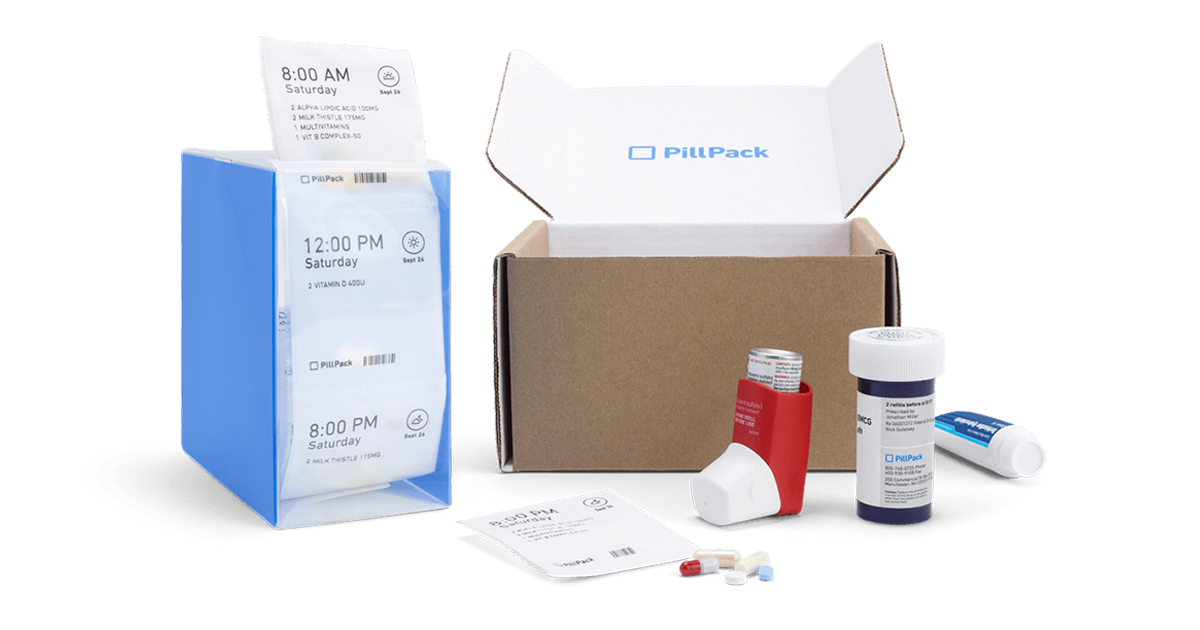
  • Pillpack is a mail order pharmacy that pre sorts and packages all your medications and supplements and ships them directly to you. I have been using them for about a year now and love it!
  • they call your docs for refills for you
  • they accept most major insurance companies
  • pay the same copays as you would for CVS, Walgreens, Safeway etc and that is it
  • great customer support and online portal
  • billing options for credit card automatic/not, FSA/HSA etc
  • medication remind app
  • don't have to spend time sorting meds (or wrongfully doing so)
  • they do my supplements as well as RX


5. Medical alert bracelets/information

  • I have spent many years searching for the right type and run into the same dilemma often: classic medical alert (chain and metal with star of life) is recognized but limiting due to allergies, lack of engraving space, or constant changing information vs classier ID or EMR (electronic record) system might not be recognized by EMS. 
    • NOTE: after many talks with EMS friends countless have said they're only trained to look at wrists for IDs
  • I have implemented a somewhat overkill system but I think its finally working:
    • I use the MyID system for my EMR/bracelet/wallet card. It can be accessed by anyone with a QR reader, smartphone, computer, or phone. It is paired with an app/website portal that can be updated whenever and offers options to upload files, notify emergency contacts, write explanations of your rare and weird medical conditions and much more. I have found that of all the solutions for bracelets I have tried (flashdrive, traditional, wallet card, necklace), this works best. I also have a MyID wallet card in my wallet, and stickers on my phone case and school ID (like I said, overkill is best)
      • I have this one personalized and on the front is has
        "Medical Alert/ Julie LASTNAME/ "see back ICE for info" 
      • Back has the access info, QR code, ID and PIN
    • I also have 3 silicone wristbands that give quick information on the same wrist. I do this because those are important for quick access, they draw attention to the other bracelet, and they paint the picture that I have multiple issues and they should definitely look at my EMR
      • "MAST CELL DISEASE/ I CARRY AN EPI PEN"
      • "LONG QT SYNDROME/ SADS AWARENESS"
      • "MEDICAL ALERT/ EHLERS-DANLOS SYNDROME"
    • BUT WAIT THERE'S MORE! At school, I also have a folder taped in plain sight on my dresser next to my bed labelled "EMERGENCY INFO" (useful for EMS, often gets passed to nurses too)
      • In it I have a copy of my 
        • MYID info
        • drivers license
        • insurance card
        • any wishes in regards to my care
        • communication instructions (since if EMS are there I often can't communicate well verbally

6. Mobility devices ≠ giving up ≠ bad

  • I started off using a cane, which I got from a drugstore, standing in line behind an 80 something year old man buying a cane and wanted to qualify my purchase with something like: "its a birthday present for my grandma...?". It was one of the first times my disability became frequently visible and took a while before I got used to people's questions, judgements, and my own stigma associated with it. But the cane wasn't good for me so I moved to forearm smart crutches which people just assumed I had sprained my ankle or something and left me alone. I hobbled on those for about a year before my shoulders gave out. Then I got my rollator which I like too, but is still hard on my body. For me, transitioning to being a part-time wheelchair user was not very hard. It gave me more independence, less pain, got me places faster, and allowed me more options for bad days. It isn't all magical though, people still judge or make comments, and there are still plenty of times I would rather just be able to walk or not have to worry about accessibility. 
  • Most important lesson I learned in that journey was that I needed to do what I needed for my body, lifestyle, and pain levels. I'm not going to lie and say I don't care what people think or that I'm somehow above it all, but for me the independence and assistance my chair allows me if definitely worth it.


Sunday, March 26, 2017

Flashies: A Saga of the Photosensitive

      Anyone close to me has now acquired an extra sense, the spidey sense of disability (I know, being friends with me comes with some real perks!). For many who don't have a disability or are exposed to people with disabilities (PWDs) there are MANY things that get picked up by your senses and determined unimportant by your attention and fly under your radar... and therefore most of you never think about this stuff. Today's post is a rant about all those things you probably never thought about/ thought mattered in hope that someday, somewhere, it will be useful knowledge to you. I'm going to break it down into categories for your organizational pleasure: (or just so you can skip to the stuff you might care about haha) physical accessibility, sensory processing, and photosensitivity/flashing lights.

Physical Accessibility

    This is probably the most on-your-radar one but still very important. First, PSA, if I hear one more person say,  "xyz is accessible except a few steps" I will hulk smash. In terms of physical accessiblity, stairs are a no. Doesn't matter how many. Just no. Love, every person who uses a mobility device. Just saying... and in case you don't think this happens... it happens all the time. 
yeah. thanks dave.

     *I know physical accessibility is not limited to just wheelchair users but we would be here forever, so I'm just talking wheelchairs for now*
       Okay, it is Friday night and you want to have some fun. If you use a wheelchair your spidey senses are tingling. Things that go through your head:
  • does that restaurant have stairs?
  • do I remember if their bathroom is accessible?
  • does public transit go there? can my wheelchair fit in Smithy's car?
  • is the place maneuverable? (particularly small places, clothing store racks are hell)
  • what is the height of the tables?
    Other places:
  • is there a ramp?
  • will I be able to reach things? (shelves in grocery stores, bookstores)
  • will I be able to carry what I buy?
  • can I get there?
(video as a parody response to the Rio Paralympics Promo Video)

Sensory Processing

    Aight so this one most of you probably don't have as much exposure to, except maybe if you know someone with autism. It is not something you can see, and at least for me personally, not something I talk about a whole lot if ever. There are a whole lot of sensory related issues and often come comorbid to conditions like Autism, EDS, Down Syndrome, Chiari, and Schizophrenia etc. One condition associated with this that I have is called Sensory Processing Disorder (SPD formerly Sensory Integration Disorder) and is very similar to how it sounds. Basically, my brain has trouble processing and evaluating sensory information such as light, touch, sound, taste, proprioception (where your body is in space), vestibular and motor control, etc. I divide it into two stages: input and processing. 
With SPD:
  • sensory information coming in can be converted to extremes (under processing or over processing)
  • people can experience heightened vision but depressed sense of taste
  • can lead to overstimulation which is when all the input from the environment you are in becomes too overwhelming and starts to become incomprehensible 
    • This video does a good job of trying to represent overstimulation (cw: changing lights and sounds) https://www.youtube.com/watch?v=plPNhooUUuc
    • Source (good article on SPD)
    • For me, even having two different people talking at the same time makes it hard for me to understand the person I am talking to and I use a lot of context clues and lip reading to try and help my brain figure it out
  • people can be sensory seeking or sensory avoidant or both
    • sensory seeking is like it sounds, seeking out input that is comforting (weighted blanket, soft fabric, hugs, running water)
    • sensory avoidant is like it sounds, avoiding input that is too extreme or not liked (textures of food, tags on clothing, bright lights, strong perfumes)
  • looks different for everyone
  • things that you don't notice or can ignore may overwhelm us or we are unable to filter it out  (i.e. buzzing of florescent lights, fans on laptops, tapping of pencils)
    For me, I am extremely sensitive to light (see next section) and have a mix of levels on other senses. I had no idea everyone didn't see the world like this until I got to college and learned about it in class. It is hard to describe what it is like in writing, but the video comes pretty close. For me places like the movies, grocery stores, classrooms, hospitals and shopping malls are overwhelming due to all the noises, types of lights, tile floors, people, smells, and unpredictability. New places are also anxiety provoking because I don't know if they will be too overwhelming. 

Flashing Lights/ Photosensitivity

      Flashing lights are everywhere. I guarantee you you can think of some examples, I also guarantee you can't think of 2/3 of them unless you've spent enough time around me. For me, flashing lights (and loud noises and extreme emotions) trigger seizure like episodes (thanks Long QT). For others, flashies can trigger seizures, migraines, fainting spells, nausea, disorientation, and more. Some flashies are unavoidable unless you are Thor (thanks bro for the lighting and thunder combo...really helpful), a movie producer, or a video game designer, but many are/ are able to put less risk in situations for people like me. Fun fact: in video game ratings in America they have to list strobe scenes in the rating but movies, concerts, plays, amusement parks, escape rooms etc do not. 
this bloody scene
For funzies let's go through some examples of flashies:
  • lightning
  • lightning in movies
  • fire effing alarms (seriously I will come teach you how to make popcorn)
  • camera flashes
  • camera flashes in movies
  • sirens
  • strobe lights in plays, concerts, movies, rides, clubs etc
  • quick scene changes (lumped in because can have same effect)
  • explosions
  • gunfire in movies
  • lightsabers (and lightsabers in movies)
  • damn apple accessiblity feature where the camera light flashes when you get a notification 
  • did I mention camera flashes?
  • 70% of the last 5 Harry Potter movies

So what? Expect me to just have shitty dark pictures of my kid's birthday in a gloomy restaurant?

Well yeah, if you don't mind...

RESPECT THESE SIGNS
OR I WILL HAUNT YOU
THE REST OF YOUR LIFE ;)
          Just kidding. As with most of these things, unavoidable is unavoidable. But here's what you can do: opt to turn your flash off when not needed or try to aim the flash away from randos, ask before taking flash pictures in groups, take a mental picture, don't burn popcorn, give warnings if you are directing plays, post signs, note time stamps in movies if watching with a sensitive friend so you can warn them, turn off that damn feature unless you need it because your deaf of HoH, and of course, be courteous and aware of your surroundings. It can be awkward and impossible for some to assert themselves in situations like this, so if they do please don't give them shit. It was probably hard for them to do. 


Phew. You better feel more edjamakated now. Julie out.


Tuesday, February 28, 2017

Care about Rare

February 28th is Rare Disease Day.

Now, if you're like me you might roll your eyes at this one. In a time with social media, ice-bucket challenges, awareness months for every condition known to man, ribbons, and GoFundMe pages, awareness of something is almost always going on. Let us all admit we are burnt out on breast cancer awareness. Don't get me wrong, breast cancer sucks but the funding and publicity are not correlated with its prevalence, deadliness, or need for awareness. Additionally, caring burnout is occurring due to politics, wars, tragedies, disasters, and maybe even the loss of your beloved pet rock "Rocky Balboa". Whatever is going on in your life, I hear you, your frustrations and hurt are valid.

Now let me tell you about why Rare Disease Day is important.

First off, lets get our knowledge on because who knows anything about this stuff, let's be honest. According to the Global Genes Project:
Orphan drugs are drugs specifically for treating rare diseases.
In 1983, the US passed the Orphan Drug Act which allocates grant
funding to companies researching and developing orphan drugs.

  • in the US, a rare disease is any condition that affects less than 200,000 people (under 50,000 in the UK)
  • 80% of all rare disease patients are affected by approximately 350 diseases
  • 50% of people with rare diseases are children
  • 35% percent of deaths in the first year of life are attributed to rare diseases
  • 30% of children with rare diseases will not live to see their 5th birthday
  • ~50% of rare diseases do not have a specific foundation supporting or researching their rare diseases
  • Only 5% of rare diseases have ANY FDA approved treatment options
Okay, now we have the numbers, so what?

Before I get to the give away your money or talk about it phase, I want to try and tell you what it is like to live in the rare world. It is scary, it is hard, it is time and energy consuming, and often times... seemingly hopeless. This will not be sugarcoated, so skip ahead to the next meme for a jolly good time.

It is going to specialists only to have them say, "that's just how it is" or "I'm sorry, there is nothing we can do". It is knowing more about (or even about) your condition than many in the medical fields. It is, unfortunately, getting misdiagnosed, mistreated, or misinformed. It is having your second opinion being google... because there is no one else and you aren't sure if what the doctor is saying is true or correct or even sane. It is constantly having to be your own advocate, nurse, management team, awareness spokesperson, and cheerleader.  It is weighing being misunderstood or mistreated over getting urgent medical care. It is putting on a smile when all you feel like doing is crying. It is that moment of panic when you have a bad day that you will need help and be all alone. It is being surrounded by people who love and care about you, yet feeling alone. It is making plans with your other rare friend to have a movie marathon but spending the whole time talking about and decompressing about your illness, doctor's visits, anxieties, and fears. It is carrying a backpack instead of a purse because you need your medications, testing supplies, and toiletries so your mouth doesn't taste like vomit the rest of your adventure. It is envying people who can say, "oh, I have ____" and not have people say "what?". It is knowing that if you wound up in the ER and couldn't communicate and people didn't have your information... normal treatments could kill you. It is having pre-programmed phrases to spit out to explain your conditions, witty comebacks to counter arrogance, and feeling the need to justify yourself so people understand. It is getting told you could fix your diseases if you prayed harder. Or drank only kale. Or by righting your sins. All from random strangers. Above all, it is isolation and uncertainty. 
So what can you do?

  • Spread awareness on social media, not just today...any day
  • Talk about rare diseases
  • Donate to rare disease research
  • Donate to companies working on orphan drugs
  • And last, but certainly not least, know that you are never alone: with our without a rare disease!


Click on picture to learn more or donate!


Saturday, February 25, 2017

All about my wheels (Nemo)


So apparently March 1st is International Wheelchair Day, so I'm going to do another post about my wheelchair, wheelchair life, and probably some other stuff, so buckle up (get it...wheelchair seat belts)! Despite wheelchairs being a fairly common thing, I have found that most people outside the disAbility community have very little experience with wheelchairs other than maybe being pushed in the awful clunky hospital wheelchairs that time you were super drunk and broke your foot. What that translates to is a) a lot of interesting/awkward questions I get asked from all kinds of people when I am out in my chair. I, personally, don't really mind them as I am an open person, but I feel like there are still lots of people who always wonder but never ask. Wheelchairs are amazing pieces of technology that are not "confining" nor "bounding". They allow independence, freedom, and no one stays in their wheelchair 24/7. 

My Wheelchair FAQs and Comments:

Excuse the poor picture
  • What kind of chair do I have? 
    • I have a rigid frame Quickie GT Ultra-lightweight manual wheelchair with a Smart drive MX2 power assist wheel. I have a Comfort Company Acta-Embrace back (removable and foldable), and a Comfort Company Vicare VersaX cushion with a custom cover. I have quick release semi-pneumatic wheels/tires.
    • Most manual wheelchair users get their chairs from either Quickie, TiLite (does titanium chairs), or Colors. Almost all ultra-lightweight manual chairs are custom made to the user's body, preferences, and medical needs (pressure reducing cushions, seat belts, etc). Most ultra-lightweight chairs are under 25 lbs and the lightest is around 9 (frame only). As a manual chair user, every bit counts in effort of pushing, loading and unloading, and portability.
  • Are there differences in wheelchairs?
  • Different back but whole chair
    • HUGE differences. First off, I will only be talking about ultra-lightweight manual wheelchairs, which is what most full-time chair users pick between that and electric. For manual chairs, one of the first decisions you have to make is whether you want a rigid or foldable frame. Rigid is durable and smoother ride, but foldable can be easier to get in and out of cars. Users also get measured for cushion dimensions, footplate position, backrest height and depth, backrest angle, "dump" angle (how far down your bum sits), center of gravity (positioning of axel in relation to wheels, important for wheelies), floor to seat height, size of wheels and much more! There are also lots that you get to pick based on personal preference like color of the frame, spoke colors, type of caster (small front wheels), size of caster, wheel type (sport, normal), hand rim type, and more!
  • Can you move your legs?
    • Yes, I personally have full use and sensation of my legs. I can't remember the exact numbers but a good majority of wheelchair users have some use or sensation of their legs. There are many reasons people use wheelchairs, so if you see a wheelchair user's feet move or see them walking, don't assume they are faking it...odds are they aren't. 
  • Why do you use a wheelchair?
    • Several reasons, technically, I am what docs and PTs call a "non-functional ambulator". All that means is that for me, walking is inefficient, painful, tiring, and often dangerous. Some of the reasons I use my wheelchair are: dislocations and subluxations of hips, knees, ankles, spine due to EDS, chronic fatigue, dizziness, poor coordination, lack of proprioception (being able to tell where your limbs are in space), weak veins and heart/ blood pooling issues, inability to walk long distances, and muscle spasms (to name just a few!). 

  • When was your accident?
    • Yeah... I get this a lot. Not everyone who uses a wheelchair has a spinal cord injury and not all of us were in accidents, there are several conditions or reasons a person might use a wheelchair, some congenital and some not. 
    • Some common examples (*indicate congenital conditions or potential to be)
      • Spinal cord injury
      • *Spina bifida
      • *Cerebral palsy
      • *Ehlers-Danlos Syndrome
      • Stroke
      • Multiple Sclerosis
      • Chronic Fatigue Syndrome
      • *Epilepsy 
      • Amotrophic Lateral Sclerosis (ALS)
      • *Osteogenisis Imperfecta
      • Traumatic Brain Injury
      • Amputation
      • *Spinal Muscular Atrophy and Muscular Dystrophy
      • Dysautonomia
      • Much more! We are as diverse as the rest of the population and no two users are the same!
  • *screaming* HOW ARE YOU TODAY MAAM? 
    • Wheelchair≠ hard of hearing ≠ intellectual disability (even if it did, not the way to go)
  • At least your feet don't hurt, I'm so tired of standing.
    • I get this one A LOT, especially at events. Yeah, my feet may not be sore but make no mistake, wheeling around is brutal on your shoulders, arms, fingers, and neck. Especially as an EDSer. Thankfully, my Smart drive (link to video demo) allows me to save spoons by automatically matching my current push speed until I tap my bracelet controller or grab my hand rims to break. 
  • What is the worst thing about being a wheelchair user?
  • "Build a ramp they said. Its the law they said."
    • Tie between grocery shopping, ice, or "accessible" buildings. 
    • Grocery shopping is a pain because you cant reach 1-2 of the top shelves from a seated level, you need mad skills to push a cart and wheel (alternating hands and pushing) otherwise have to balance a basket, once you get home you still have to get them inside...
    • Ice sucks on wheels
    • Like of all the architectural feats and amazing designs and still like 80% of buildings have steps to get into them. Smh world.
  • How do you drive? (answered for people who don't have leg function)
    • Manual hand controls or electric ones
    • Example of manual controls
      • Manual ones consist of two poles with clamps that go around the gas and brake and you push the gas one for... gas and the brake one for the brake. These can be easily removed and don't permanently alter the car. This leaves one hand for steering. Many people have some variation on the "suicide knob" which attaches the wheel and makes it easier to turn with one hand
      • Electric controls have to be retrofitted with controls that work for the driver but most have a control setup for brake and gas and then the steering wheel
  • Here let me give you a push? or *grabs your push handles and starts pushing you without asking*
    • NOOOOO! Thank you for caring and being nice, asking is always fine. First off, it takes some skill to properly push a wheelchair on normal terrain, certain sized cracks might send you flying, ramps are hard to control speed on, and people have to be tactfully avoided. Second, NEVER touch, push, or grab a person's wheelchair without their permission. It is terrifying, rude, and dangerous. I have had it happen many times and end up with dislocated fingers, some bruises, and occasionally damage to my chair. 
  • Do you need help? "No, thanks" No really, let me help.
    • Similar to above, but believe it or not, we get along in the world fairly independently most days. Again, always okay to ask but NEVER ASSUME. 
I love my wheelchair. It is my freedom, my independence, and my ticket to less pain. It is a piece of equipment, but also an extension of me. Treat it like you would treat me. Happy early international wheelchair day, I hope it is wheelie great! *badumchhh*
when a tree is more important than access

Sunday, February 5, 2017

If You Can't See the Good, Make the Good

             Okay guys, this is not a political blog so this will not be about politics, but I am acknowledging the many whose lives have been torn apart recently due to aforementioned politics. I feel you, don't give up. These past couple months have been very challenging for me and friends due to health, losses, and overall "bad stuff". Despite it all, we find ways to carry on. We find new ways of being okay, we accept the pain and the hurt and we find new reasons to live. Sometimes it just has to be enough that in this very moment you agree to hold on through the next. It is okay to not be okay. Sometimes it is enough to hold on to the belief that life in and of itself is valuable, even when you can't formulate a reason for things. And if your me, sometimes you hold on to a lesson in a book or movie, holding on to the belief it is true.
         The title of this blog comes from an amazing young boy who, unfortunately, lost his 10 year battle with a rare disease. Anyone who knew him knew that despite 80+ surgeries, near constant hospitalizations, daily pain, and 2 failed marrow transplants, he loved his life. He dedicated his life to others and never complained. One of his catchphrases was, "if you can't see the good, make the good". I am so very thankful to have had the pleasure of knowing him, even if it was ever so brief. Irrational as it is, one of the hardest things about losing him was dealing with the feelings of why him and not me. I feel like he had so much more to offer the world, though I know he is home now. I will do my best to spread love and light the way you taught me, you are missed. Thank you to all my friends and family who have supported me through this time.

"'Yes, thats' so,' said Sam. 'And we shouldn't be here at all, if we'd known more about it before we started. But I supposed it's often that way. The brave things in the old tales and songs, Mr. Frodo: adventures, as I used to call them. I used to think that they were things the wonderful folk of the stories wen and looked for, because they wanted them, because they were exciting and life was a bit dull, a kind of sport, as you might say. But that's not the way of it with the tales that really mattered, or the ones that stay in mind. Folk seem to have been just landed in them, usually -- their paths were laid that way, as you put it. But I expect they had lots of chances, like us, of turning back, only they didn't. And if they had, we shouldn't know, because they'd have been forgotten. We hear about those as just went on -- and not all to a good end, mind you; at least not to what folk inside a story and not outside it call a good end. You know, coming home, and finding things all right, though not quite the same -- like old Mr. Bilbo. But those aren't always the best tales to hear, though they may be the best tales to get landed in! I wonder what sort of a tale we've fallen into?'"
-J.R.R. Tolkien
 And that, my friends, is why Samwise Gamgee will always be the best. That and...


And that's all I have to say about that...


Saturday, December 3, 2016

Top 5 Things I've learned through the hard way and internet quotes


1) "Nothing in this world worth having comes easy." - Dr. Bob Kelso
      In one of my all time favorite scrubs quotes, Bob Kelso dishes out some serious sass as well as important advice. This has made its way up the list of favorites, especially in the past couple years. Life is precious, but hard. That being said, don't confuse between struggling and a bad life. When I graduated high school, I believed I would go to the college I was accepted to for four years, get my nursing degree, work some long hospital shifts, fall in love, settle down and keep living...just like everyone else. After all, I had gone from elementary school, to middle school, to high school... college was obviously the next step. A year later I went to move into my dorm sophomore year with the friends I made and the dorm I wanted, and a shiny 4.0 GPA (still baffles me) when I got a call from my doctor who strongly recommended I come back home for treatment. Sad, angry, disappointed and confused we packed my stuff back up and moved out (RA was so confused). I finished my vacation with my family then drove back up home with my mom. As we pulled into the driveway I remember wanting to put on my invisibility cloak and run into the house, hiding for the possibility of seeing a confused neighbors look or prodding questions. The next couple weeks I threw a major pity party and honestly felt ashamed and like a failure. All my friends were surely having a great time off at college, living it up carefree. This linear path I had drawn out perfectly straight and parallel had been erased. It took me a year of treatment, online class at community college, and bitterly scrolling through my newsfeed before I drew up a new path: a new school, new friends, and a new major. Then something really cool happened. I started to open up about my struggles, my frustration, and my change in direction, and so did other people around me. Turns out my friend had transferred colleges too and another one decided last minute to work instead. So guys, don't worry... life isn't linear and it sure as hell ain't simple.


2) "Sometimes you never know the value of a moment until it becomes a memory." - Dr. Seuss
        I think all of us at some point in our lives have learned this one the hard way. That time with your grandma you spent with your mind elsewhere and it turned out to be your last. That joy of holiday traditions you no longer do because xyz. That time you ended a relationship over something stupid. Realizing that some of the moments you can cherish forever are smiles on faces or making up crazy animal combos with a friend (schwogfry for life). We are not guaranteed this day, nor this hour. Remind yourself of the beauty and love that surrounds you each and every day.

3) "Be at peace, not in pieces." 
      Despite being an awesome pun, this is one of my go to catchphrases in times of trouble. I like control... most of us do, and whenever I feel I'm losing control this is a solid go to. I come from a long line of very anxious people and believe me when I tell you, it takes its toll. Just remember it's okay to accept your not in control or need help.

4) "Health is a crown that the healthy wear, but only the sick can see." -Imam Shafi'i
     Yes.

5) "Be kind, everyone you know is fighting their own battles." 
     Similar to #1 and I posted about this before but I needed reminders to myself all the time. People are different and that's okay. We grow and expand as humans by beings around people who are different than us. You don't have to agree or concede or even argue. 


Well, my fingers already hate me, I promised my brother I would get back to blogging (taadah!) so I'll be trying to post some more stuff more frequently including a health update because I know a lot of y'all have asked. 

Happy holidays!